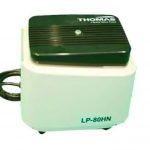
What is the Best time to Buy a Septic Blower

What is the Best time to Buy a Septic Blower

SKINCARE ESSENTIALS FOR HOLI

It can be very well said that a Septic Blower is the Lifeline of Aerobic Treatment System. The septic bowler is the key differentiator between Aerobic Treatment System and Conventional Treatment System. Aerobic Treatment System is a technologically advanced form of wastewater treatment. They are made up of multiple chambered tanks or multiple tanks, with a number of stages. These stages include a solids collecting tank (trash tank), the aeration chamber, and a settling tank. There are some Aerobic Treatment System that have a fourth stage for disinfection (Chlorine or Ultra-Violet).

If you are setting up a home or a commercial facility, you are bound to produce water waste. This water waste needs to be properly disposed of. Most countries have their regulation on water disposable systems and treatment of water waste. Hence, it is critical that Septic blowers are installed at the time of building planning.

Most modern establishments opt for the Aerobic Treatment System because of its advanced technology and better and more effective results.

The biggest role of the septic bowler is to aid the Aerobic functioning. The mechanism includes the air pump pumping oxygen into the water which forms Aerobic bacteria. This bacteria devours the water waste. It also breaks down the large solid particles into smaller particles thus aiding the bacteria to work faster on the water waste.

  1.  The air pump puts oxygen into the water which allows the formation and survival of Aerobic bacteria.
  2. The waste in the tank is eaten up by this Aerobic bacteria.Aerobic bacteria is more efficient in waste treatment compared to anaerobic bacteria which is found in the conventional Septic System.
  3. The air pump further breaks down larger solids into smaller particles which helps the bacteria to work on the waste.

The usual lifecycle of an air pump is between two to three years. They need to be in a proper functioning state else it would need a replacement. This would ideally give an idea on the replacement cycle and how often you would need to buy a septic blower.

Experts from specialized companies like PumpAir could guide you with proper information and details. You may visit the website https://www.pumpair.com.au/
Share Now

Recent Posts

buying a vacuum pump

Checklist to follow while buying a vacuum pump

SKINCARE ESSENTIALS FOR HOLI

The vacuum pump is a very critical component of a system. You must know exactly what kind of vacuum pump you need for your system. Otherwise, it can lead to loss of efficiency and productivity. Deciding on the right vacuum pump is not difficult and knowing a few factors can help you in the process of making the right choice.

The following are the necessary points you should consider before buying a vacuum pump:
  • Flow Rate: The flow rate of a pump refers to the volume of gas it displaces in a given time. It is measured in the units: m3/hr, m3/sec, or LPM.
  • Vacuum Level: It is very important to know the vacuum level required. This helps determine the type of vacuum pump you require
  • Pumping speed (volume flow) and pressure requirements. Assess the vacuum pump’s capability to produce both the required pumping speed (volume flow) and throughput (mass flow) against the process’s needs by using the equation Q (gas load) = S (pumping speed) x P (pressure) calculation.
  • Operational Temperature: The operational temperature affects the health of your vacuum pump. You should consider the temperature of the working conditions of the pump. The pump pulls in the air/vapour from the system, therefore, extreme temperatures will have a direct impact on their performance.
  • How Much Noise you can stand : Typically, the larger the machine is, the louder it is. For homes, and for office spaces where a quieter sound level is desired, there are vacuums that have been designed with insulated motor housings as well as newer low-noise motors for quieter operation.
  • Chemical compatibility. Determine the compatibility of the gases used with the pump and any potential issues with the process gas (such as moisture). For example, Dry vacuum pumps can tolerate acidic as well as corrosive.
  • Power: The efficiency of the pump is an important criteria while selecting the pump determines the running cost and also affects the cost of the control panel as well.
  • Required Lubricant: Lubricant allows the vacuum pump’s components to work with lower friction and in some cases determines the vacuum level it can attain. The lubricant also increases the lifespan of the pump
  • Evacuation Time: The time it takes for the vacuum pump to create the necessary vacuum in the required system is called Evacuation time. Some applications require long evacuation time while others require the opposite.

Share Now

Recent Posts

Engineered Systems (2)

What are vacuum pumps? A detailed guide with all details

SKINCARE ESSENTIALS FOR HOLI

Vacuum pumps came around in the 1600s and since then have proved to be extremely helpful tools with a wide range of uses. This is a guide to understanding their functionality, types, and uses so you can make an efficient and appropriate purchase.

How do they work?

In layman terms, vacuum pumps are used to create a vacuum by pulling air or gas out of an area that is sealed. Once they remove gas or air from a section, they create a space in that section or what can be described as a ‘partial vacuum’. Their feature of being able to create a suction (like a vacuum cleaner) can be used to suck out liquids, gases, or air that needs to be pumped elsewhere. Vacuum Pumps can also be used to clean something out i.e. if liquid needs to be removed out of a sealed space for cleansing.
Inside the vacuum pump, there are two regions – one with high pressure and the other with low pressure. Their primary function is to remove liquid/gas from the high-pressure zone to the low-pressure zone while creating a vacuum in the middle (because the initial zone would be left empty).
Vaccuum pumps can be both dry and wet depending on how much exposure is allowed between the gas and water/oil.

Where are they used?

One of the most popular uses of these pumps lies in air conditioning systems. They are also used heavily in electric lamps and the semiconductor industry. Additionally, vacuum pumps can also be used to create medical equipment to perform medical procedures related to radiotherapy and other surgeries. The aviation industry benefits from vacuum pumps too, as they can be used in various ways to maintain and control pressures.

What do different kinds of vacuum pumps do?

When it comes to segregating them, there are three different kinds of vacuum pumps – Positive Displacement Vacuum Pumps, Kinetic Transfer Pumps, and Entrapment Pumps.

Positive Displacement Pumps are primarily of two kinds – reciprocating and rotary. Rotary Vane Vacuum Pumps (eg: Liquid Ring Pump) comprise of vanes that are mounted on a rotor. This set up is installed eccentrically inside a cylindrical housing and moves radially. Rotary pumps can be used both, dry or lubricated.

Reciprocating Pumps, on the other hand, consist of a piston inside a cylinder that goes back and forth to create suction, displace liquid, or discharge gas.

Kinetic Transfer Pumps are used when gas needs to be transferred consistently from inlet to outlet. They create a low-pressure area and transfer gas molecules using some form of a rotating element. These pumps work on the principle of momentum transfer and are often referred to as Momentum Transfer Pumps too.

Kinetic Transfer Pumps can primarily be of two types based on their functionalities – Mechanical Kinetic Pumps (eg: Turbolecular Pumps) and Propellant Pumps (Vapor Diffusion Pumps). While Turbomolecular Pumps use high speed rotations and blades to transfer momentum and energy to gas molecules, Vapor Diffusion Pumps use high velocity oil for the same purpose. As the descriptions suggest, Turbomolecular Pumps can be used dry whereas Vapor Diffusion Pumps require some form of lubrication (usually oil).

Entrapment Pumps such as Cryopumps can also be called Capture or Trapping Pumps because their main function is to use cryogenic technology to freeze or trap any gas inside. Likewise, Sputter Ion Pumps can charge gas molecules electrically to trap them inside by using a process called ionization.

How can PumpAir help?

At PumpAir, we offer a variety of vaccum pumps from some of the most trusted suppliers in the market. Feel free to reach out to our team of experts who can provide you with the right match of products so your business/factory functions smoothly without the hassle of constant maintenance or replacement.

Share Now

Recent Posts