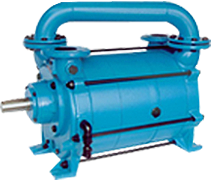
Liquid ring vacuum pumps are widely used across industrial applications to generate process vacuum and handle gases and vapours. They use a rotating impeller and a sealing liquid, usually water or another suitable liquid, to create a liquid ring inside the pump casing. This design makes them a reliable option for demanding applications involving moisture, vapours, and process gases.
PumpAir Solutions supplies a range of liquid ring vacuum pumps from established manufacturers, including Pompetravaini and Gardner Denver Nash. With different models and capacities available, we can help you identify a suitable liquid ring pump for your industrial process and operating requirements.
Reliable Liquid Ring Vacuum Pumps for Industrial Applications
Liquid ring pumps are designed for dependable vacuum generation across a variety of industrial environments. Their operating principle allows them to handle suitable gas and vapour streams, including applications where moisture or entrained liquids may be present.
PumpAir Solutions offers liquid ring vacuum pump solutions for industries requiring reliable performance, robust construction, and continuous process operation.
Specifications Of Liquid Ring Vacuum Pumps
Our range includes liquid ring vacuum pumps in different capacities and configurations to suit a variety of operating requirements.
Key specifications listed for the range include:
Suction Capacity
The existing range information lists the following suction-capacity categories:
Small Vacuum Pumps – 60 – 10000 m3/hr.
Medium Vacuum Pumps – 10000 – 20000 m3 /hr.
Large Vacuum Pumps – 20000 – 40000 m3/hr.
Actual performance depends on the selected model, operating pressure, and application conditions. Contact PumpAir Solutions for assistance in selecting a pump that meets your required vacuum level and flow rate.
How Do Liquid Ring Vacuum Pumps Work?
A liquid ring vacuum pump uses an impeller positioned eccentrically inside a casing. Water or another suitable sealing liquid forms a rotating ring as the impeller turns.
As the impeller rotates, spaces form between the impeller blades and the liquid ring. These spaces increase in size to draw process gas into the pump through the suction port. As rotation continues, the spaces decrease in size, compressing the trapped gas before it is discharged.
The discharged gas and sealing liquid are then separated, and the sealing liquid is replenished or recirculated as required by the system design. This continuous process enables the pump to generate vacuum for suitable industrial applications.
PumpAir Solutions offers a selection of Pompetravaini liquid ring vacuum pumps to suit different vacuum requirements and industrial processes.
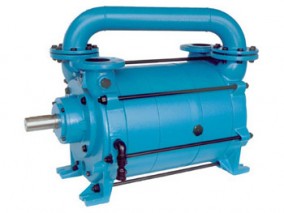
Product Specifications:

Product Specifications:

Product Specifications:

Product Specifications:

Product Specifications:
Vapor Condensation of Liquid Ring Vacuum Pumps May Produce a Capacity Bonus
When moist air or gas mixes with condensable vapors that enter the liquid ring vacuum pumps, the seal liquid, which is generally at a considerably lower temperature, cools them down. They therefore cool and combine with the seal liquid. These vapors now occupy less area compared to when they were a gas stream. This reduction in the volume yields a capacity bonus.
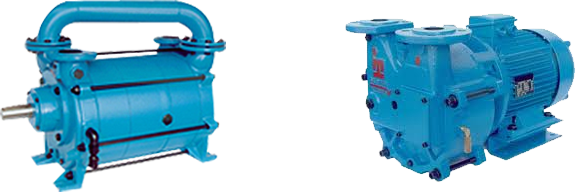
Their liquid ring operating principle reduces direct mechanical contact between key components. This can help reduce wear and support reliable performance in suitable industrial applications.
Yes. Suitable models can handle wet gases, vapours, and certain entrained liquids. The correct materials and configuration must be selected for corrosive chemicals and other demanding process conditions.
Efficiency depends on the pump model, operating point, sealing-liquid conditions, and system design. Correct sizing and selection can help improve overall operating efficiency.
Consider the required vacuum level, suction capacity, gas composition, moisture content, operating temperature, sealing-liquid requirements, and materials of construction. PumpAir Solutions can help assess your application and identify a suitable pump.